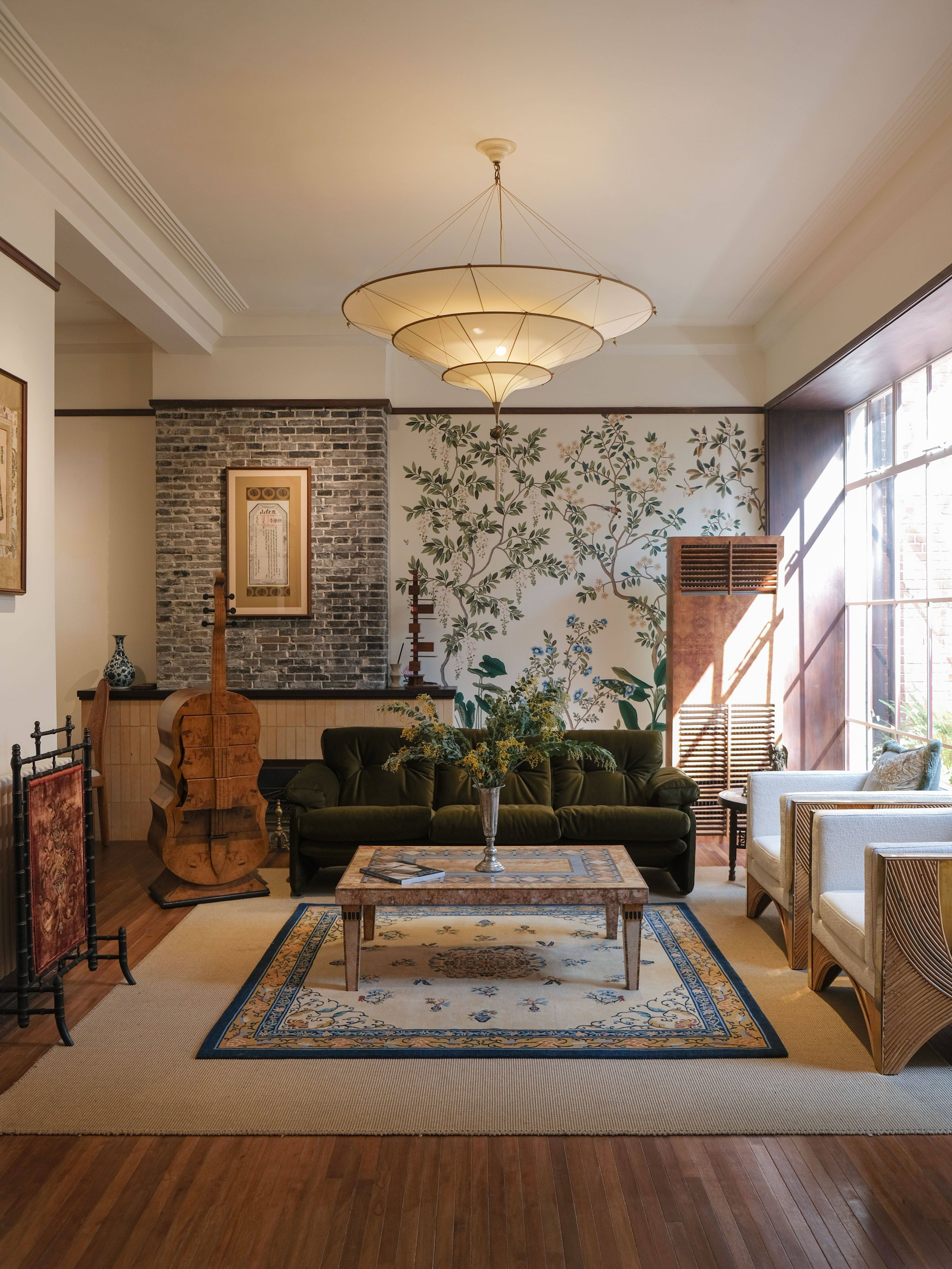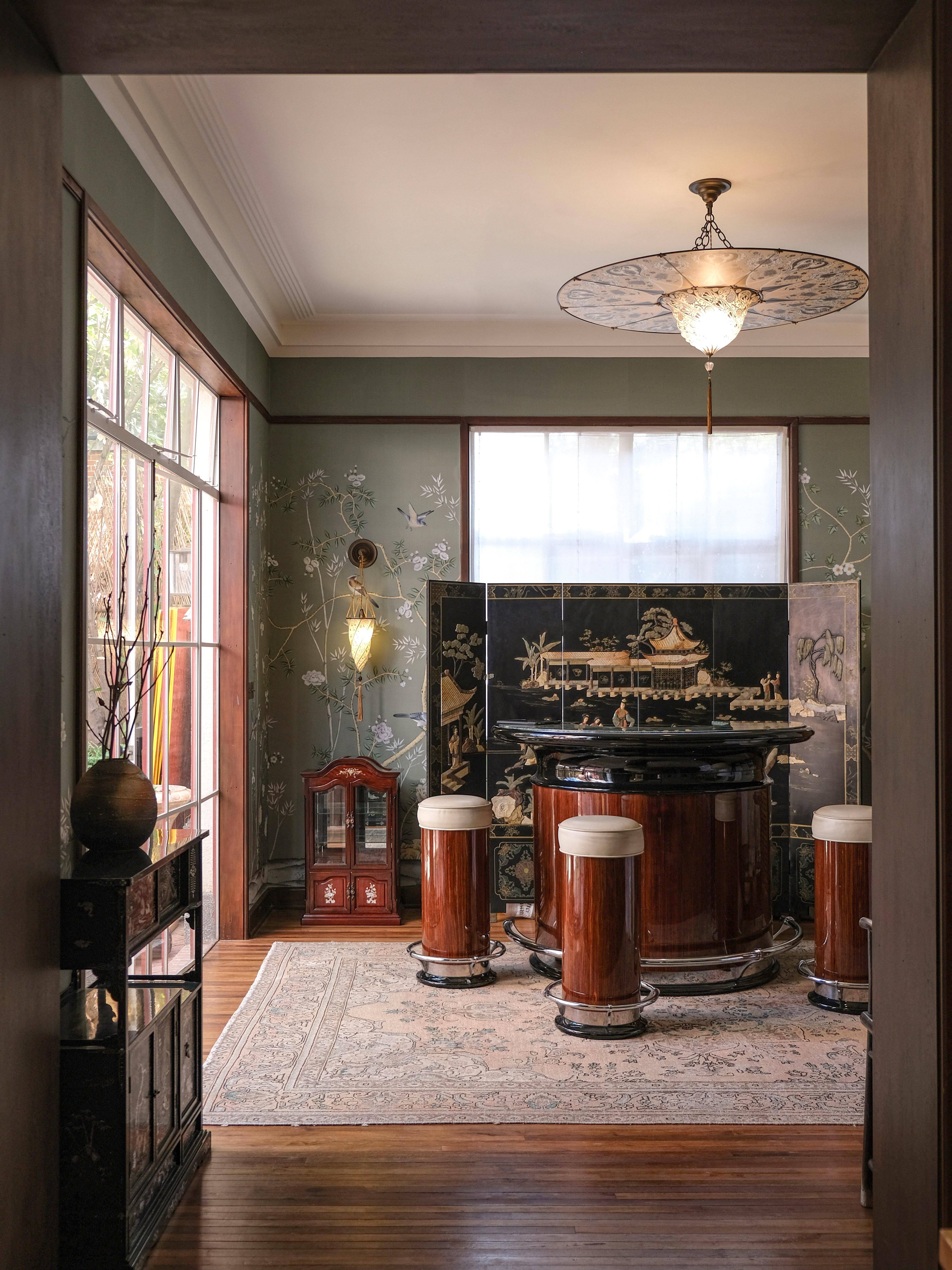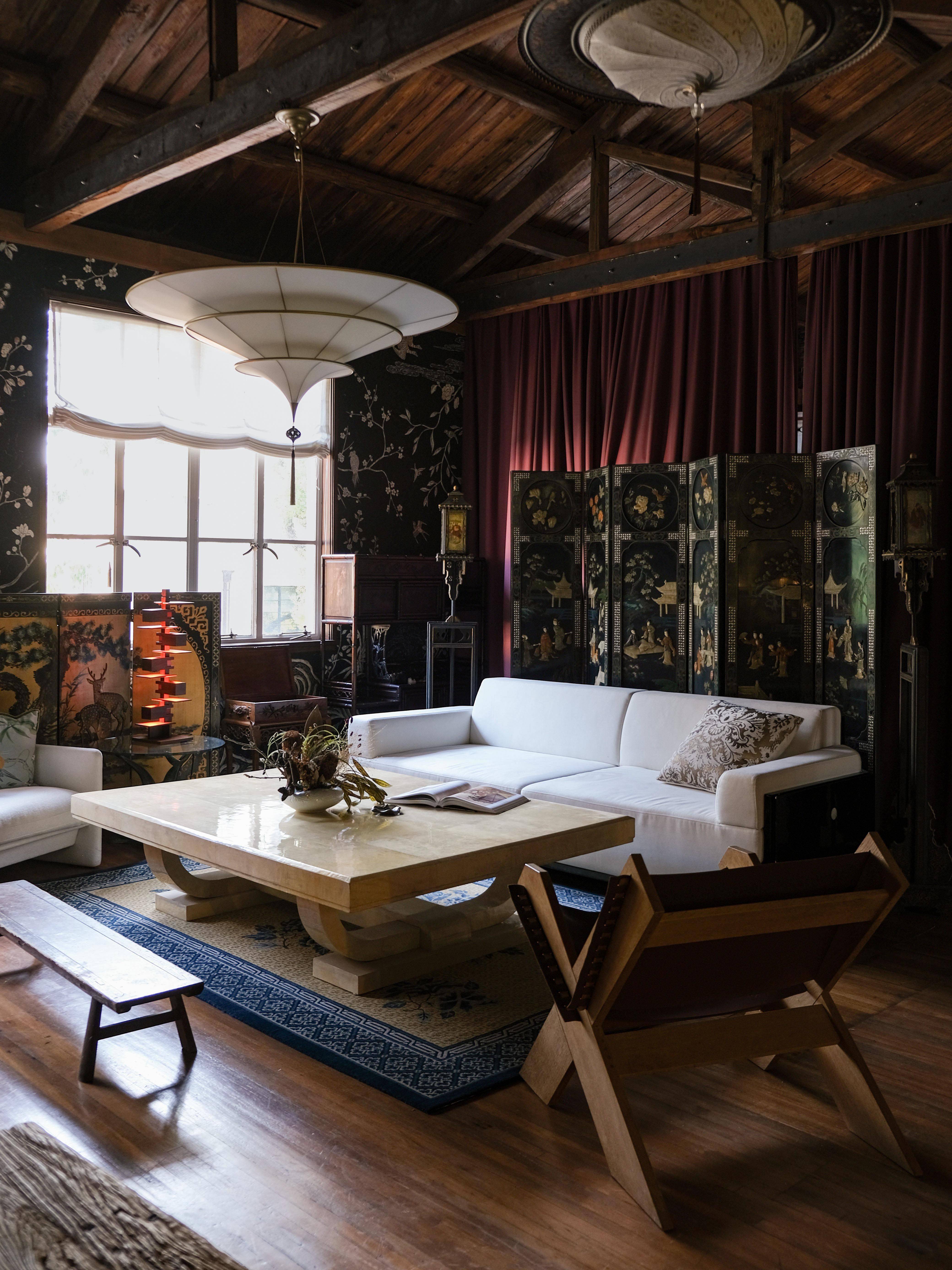
As a curatorial gallery built from a female perspective, AMBELIE brings together Chinoiserie furniture rooted in Eastern craftsmanship, Western designer pieces, vintage finds, and avant-garde fashion. Within this three-storey townhouse, we construct a complete portrait of a woman’s living space.
“A woman must have money and a room of her own if she is to write fiction,” Virginia Woolf wrote a century ago—a declaration addressed to all women. A room is not merely a place to reside—it is a right to think, to speak, and to create.
A dwelling shelters her from the noise of the world and, at the same time, contains both her softness and her strength. When she is alone in her room, the placement of chair and desk, the paper and pen on the table, the swaying of a lamplight—they all become her language. A home is not only a vessel for living; it quietly shapes the borders of the mind.
In this exhibition, the daily life of women unfolds gently.
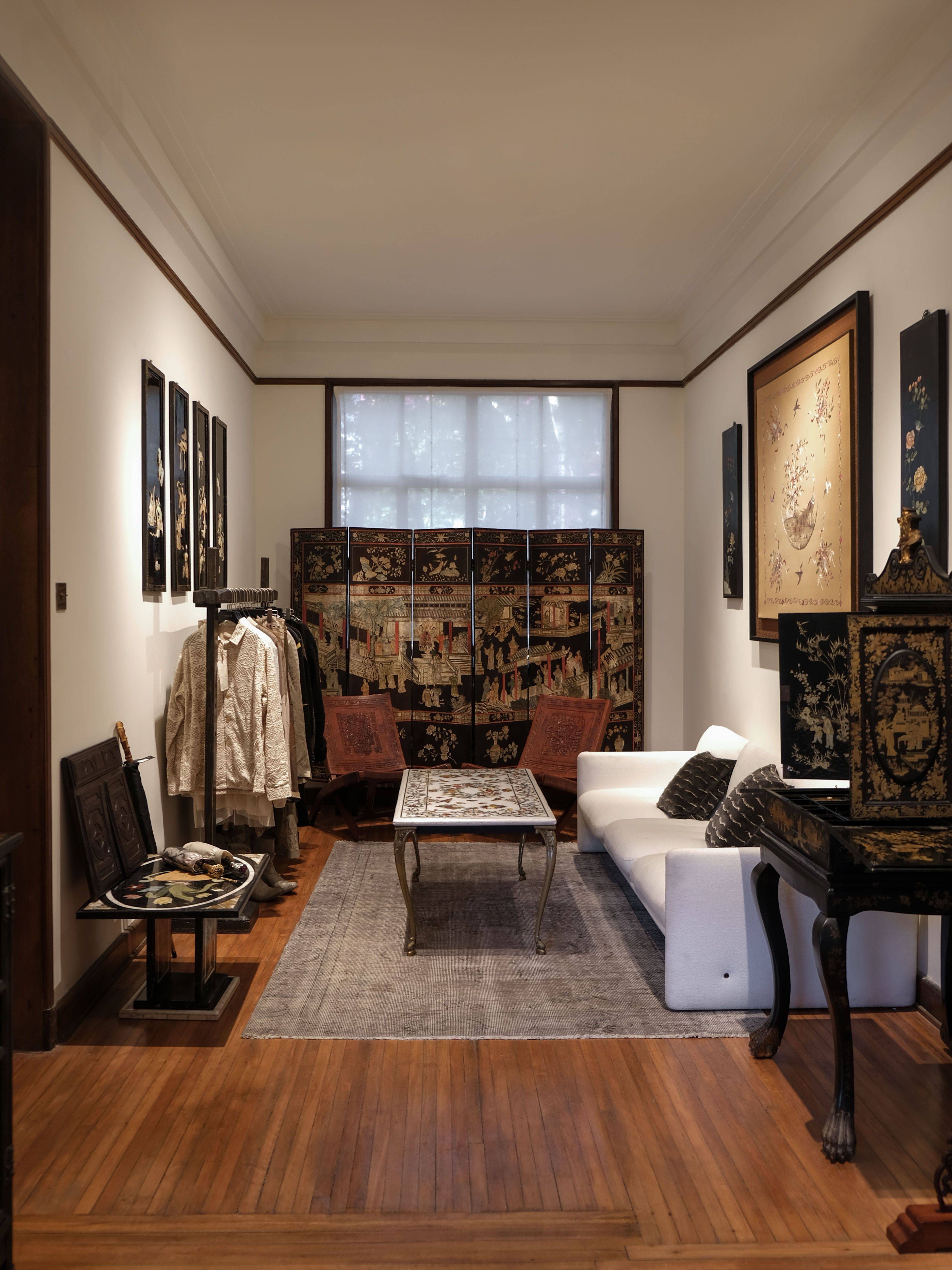
On the first floor, soft light falls from Venetian Fortuny silk lamps onto a space where classical and contemporary elements intertwine. Her salon recalls the intimate gatherings of eighteenth-century Europe—moments of talking about art, literature, and life. A Chinese lacquer screen, carved with scenes of scholars and elegant ladies, stands nearby, its imagery bridging East and West.
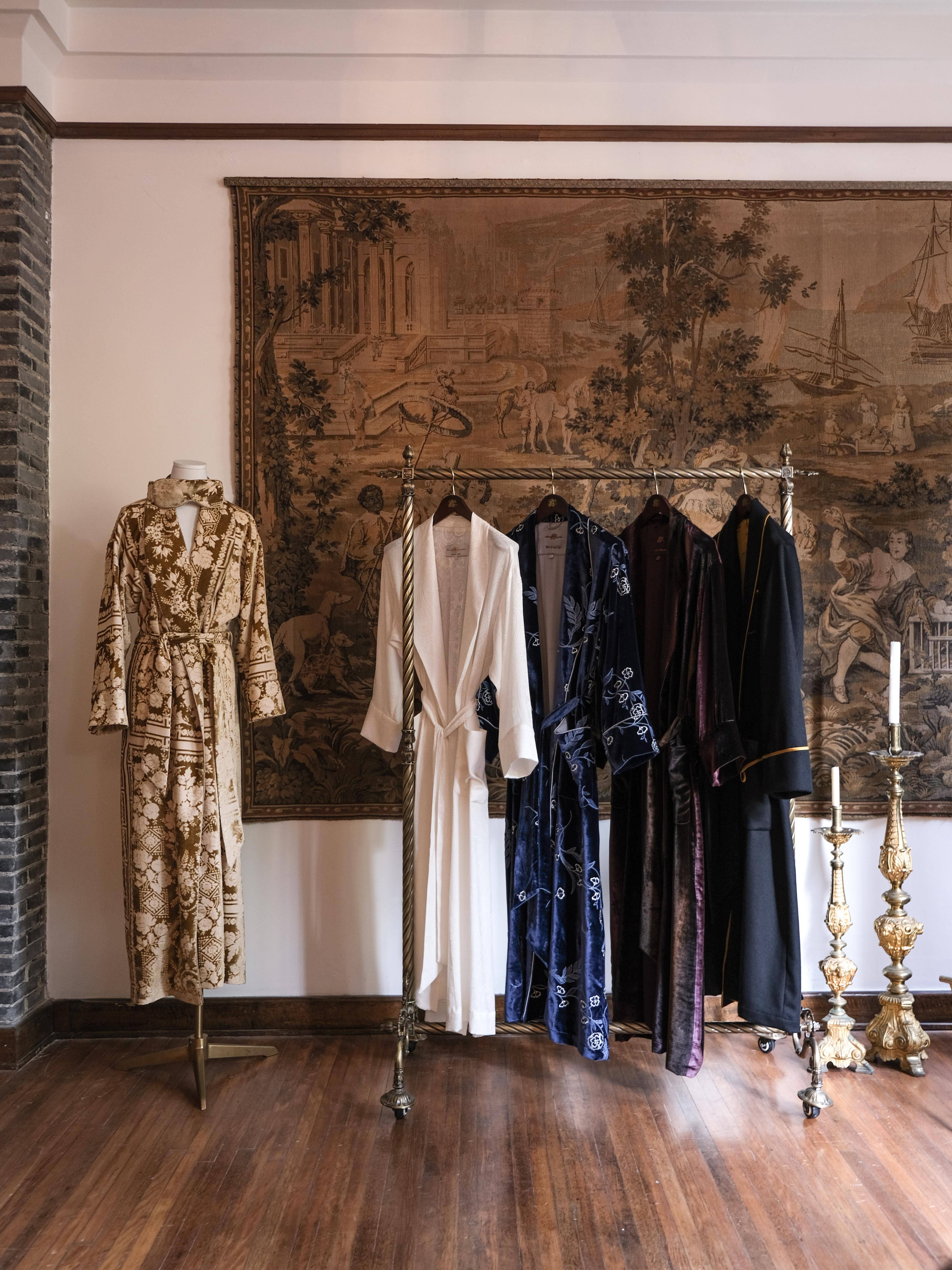
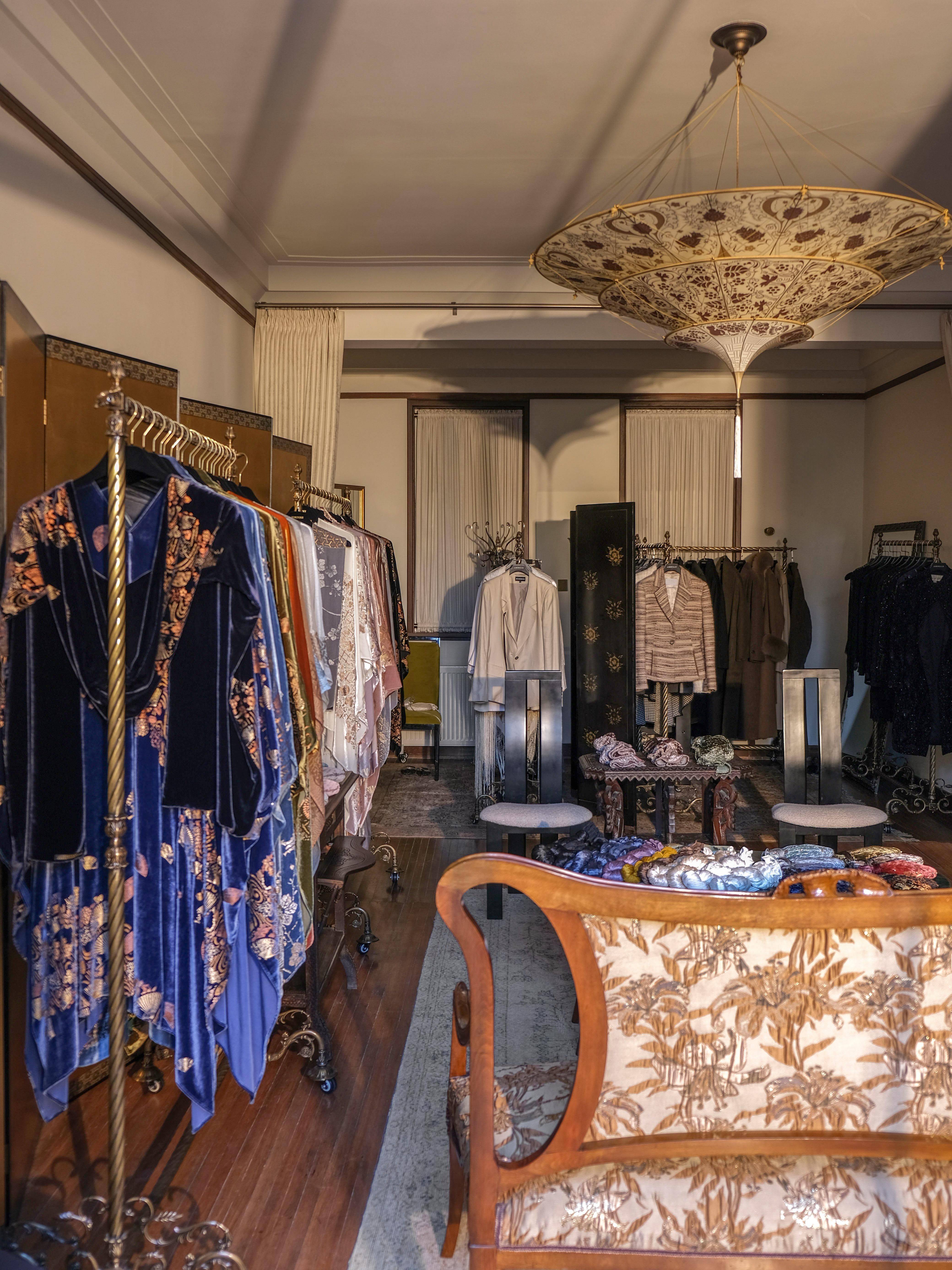
Ascending to the second floor, we enter her dressing room. Embroidered robes, loungewear, and pleated shawls from European ateliers and artisan houses rest quietly—companions to her most significant occasions, and to her private moments of stillness.
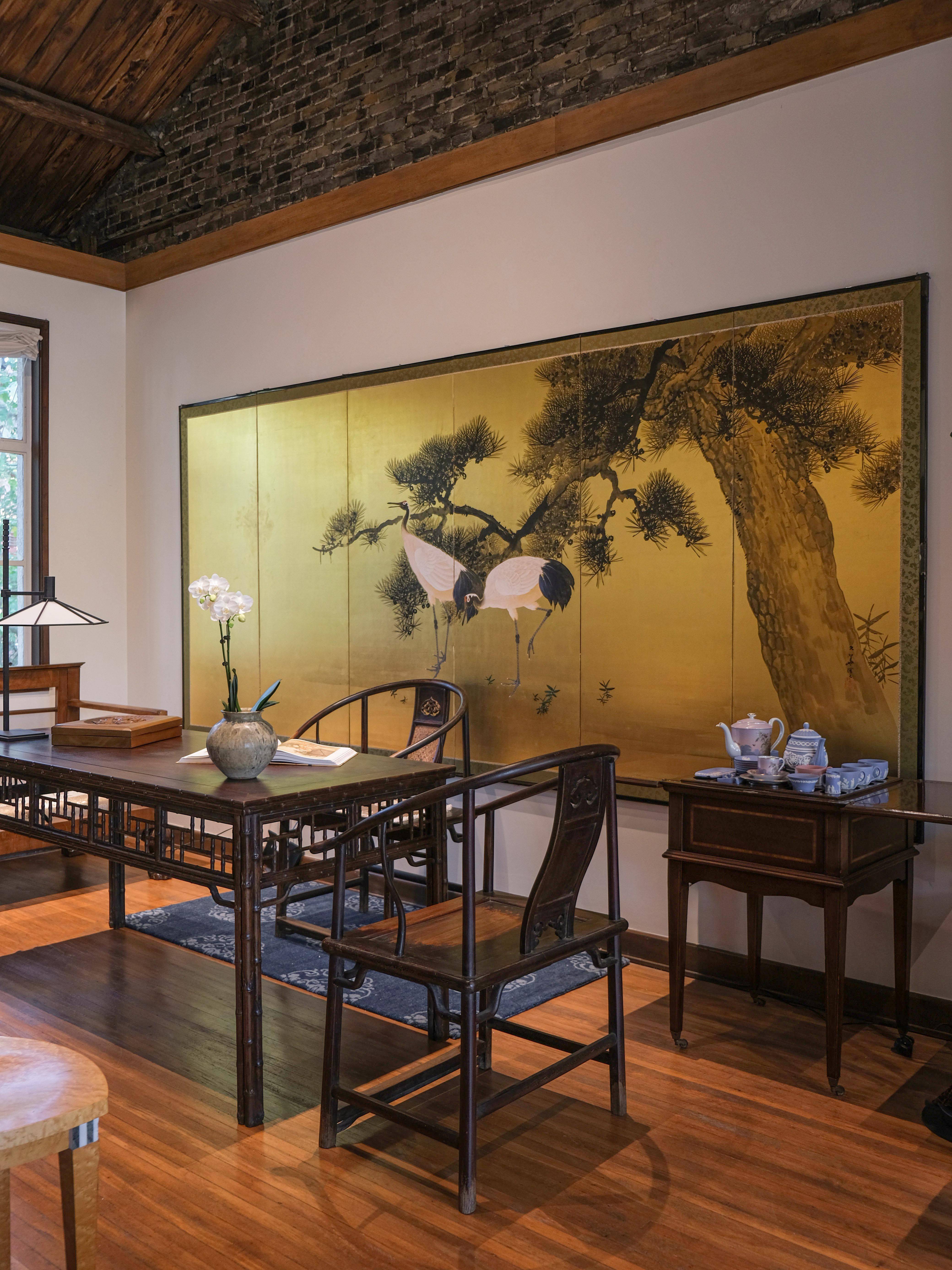
The top floor is her most intimate realm. Reserved for her closest confidants, it glows with the warm light of Fortuny lamps that have illuminated countless late-night conversations. A spacious Chinese desk in her study carries her thoughts and her writing; here she reflects, confides, and creates.
Throughout the house, memory and reality overlay. The traces of women creators seem to linger: The ebony lacquer screen echoes Coco Chanel’s lifelong love of Chinese screens. Eileen Gray gently rocks on her Transat chair, imagining her next modernist work. Fortuny lamps unfurl their feathered glow, shimmering with the inspiration of Henriette, his muse. Zhang Ailing sits before the desk, beneath the shadow of plane trees outside the window, writing her sharp, unwavering heroines…
Their mental landscapes, like independent kingdoms, also required spaces to hold their creativity and their selves. Across time, they gather here. These women—each of them a fair lady—are also every “she.”